
 EN
EN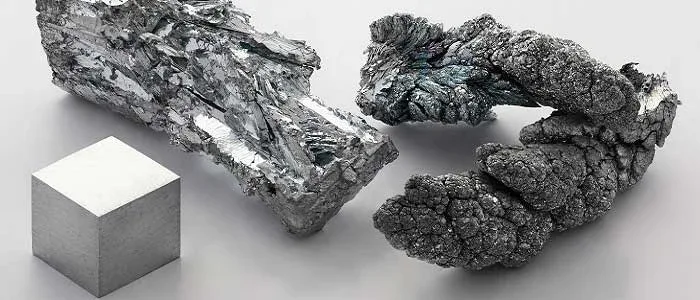
Zinc mining is a major industry worldwide. Alongside production from primary sources, zinc is also produced from secondary sources, including old scrap.
In terms of use, zinc is one of the three most important non-ferrous metals after aluminium and copper. Visible zinc metal reserves are approximately 200 million tonnes worldwide and 2.3 million tonnes in Türkiye. It is a dull-cast, bluish-silver metal that is brittle at normal temperatures but becomes malleable when heated to 100ºC or above. Its valence is +2 and its specific gravity is 7.14. Because it is chemically active and readily forms alloys with other metals, zinc is used in the production of many industrial alloys and compounds. The five main uses of zinc metal as a primary product are galvanizing, die-casting alloys, brass and bronze alloys, zinc oxide, and rolled zinc alloys.
Today zinc is most widely used to coat base metals (galvanization), in alloys for pressure die casting, as a pigment in the paint industry, and in various zinc products. Its importance continues to grow.
In line with advances in technology, zinc metal has also recently become an important alloy input in the production of composite materials. Its use is expanding particularly in the aerospace industry, robotics and automatic control systems.
Base metals, especially iron and steel, are coated with zinc to protect them against corrosion. A large share of the zinc produced worldwide is consumed in this way. The main reasons are zinc’s resistance to normal weathering, its ability to protect iron (galvanization), and its economy.
Zinc is used most extensively in the galvanizing sector, where it helps protect iron and steel against rust. Iron and steel are affected by the atmosphere around them and undergo corrosion. Protective methods must be applied to metal surfaces to eliminate the external factors that cause corrosion. In this context, hot-dip galvanizing is preferred as the coating method that provides the best and longest-lasting protection of metal surfaces with zinc.
Increasing corrosion resistance is one of the main challenges in extending the service life of iron and steel. For this purpose, a protective coating layer must be formed on metal surfaces to minimize the rate of deterioration.