
 EN
EN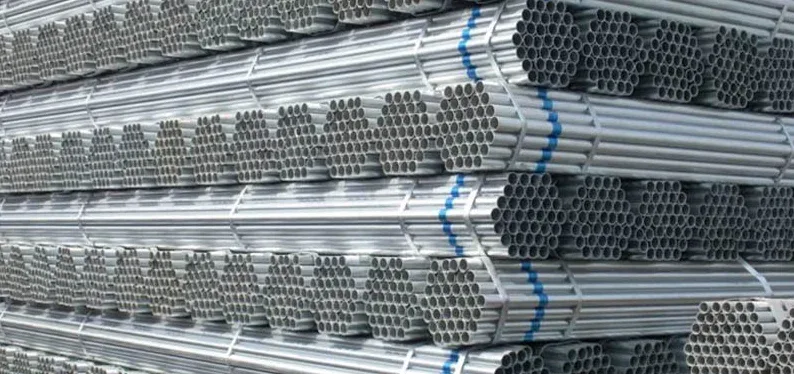
The causes and mechanism of corrosion are the same for almost all metals. While the main cause and formation mechanism is based on electro-chemical reasons, the effect characteristic on different metals also varies due to changing parameters.
Corrosion formation; It starts with rusting, which is the result of different atmospheric environments, and increases faster on unprotected surfaces than on protected ones.
Corrosion that occurs as a result of atmospheric conditions is a chemical degradation. Iron and steel materials are affected by these different atmospheric conditions and lose their physical, chemical, electrical and other properties. Therefore, rust that occurs as a result of corrosion is not only an appearance defect, but also a chemical reaction that corrodes the metal and reduces its lifespan.
As a result of the reactions developing between Fe-Zn in materials coated with zinc by the Hot-dip galvanizing method, Fe-Zn phases are formed within the coating. (eta, zeta, delta, gamma). Starting from the base of the steel, each layer contains zinc in increasing amounts up to the outer surface. Therefore, there is a gradual transition towards Fe-Zn phases, which provide a strong bond between the base metal and the coating. The top layer is the zinc layer and provides shine. Over time, this layer leaves itself to nature under atmospheric conditions and the brightness disappears. After this stage, the second layer, the zeta layer, provides the real protection.
This protection delays corrosion from 15 years to 80-100 years. Such protection is not available in any biologically based protection (paint). In places of damage to the paint and plastic coating, the metal rusts and removes the coating layer. Therefore, such coatings are not safe and long-lasting compared to hot-dip zinc coating. It also requires constant maintenance over time. Just as you cannot prevent the material from being damaged; You cannot prevent the formation of rust in the damaged area, which progresses into the material. In this sense, the most rational and definitive solution to protect iron and steel against rust is to coat metal surfaces with the "hot-dip galvanizing" method. This method provides a coating that is more resistant to external influences and has the longest protection life, with the alloy layers formed on the material surface as a result of the metallurgical bond between the metal surface and zinc.
In the hot-dip galvanizing process, molten zinc reaches all the details of the steel, such as edges and corners, and forms a holistic coating, protecting iron and steel materials against atmospheric, underground and underwater corrosion, and ensuring sealing. Thus, it prevents corrosion of steel in areas where paint cannot reach. In paint coating applied directly to metal surfaces, rain or air humidity leaking through the cracks reaches the steel and causes rust to form, which causes the paint to peel off over time.
Although paint seems to be more affordable when evaluated in terms of cost, it is also understood that hot-dip galvanizing is more economical, considering the ability of galvanized steel to resist corrosive environments and its long life.
If the advantages of the zinc plating method compared to other methods are listed;
1. It is Long Lasting
Hot-dip galvanizing is an extremely long-lasting corrosion protection. Protects against corrosion for over 40 years under normal conditions. Even under severe conditions (for example, industrial conditions and marine environments), the period it provides protection is over 25 years and does not require maintenance and repair. Even in cases where maintenance is essential, the process to be carried out is very simple compared to the repair of other protection methods. Coating service life can be determined by evaluating the coating thickness and different atmospheric conditions.
2. It is reliable
Zinc coating provides reliable corrosion protection applied under industrial conditions and in standards defined in accordance with TS 914 EN ISO 1461. Expectations regarding the properties and reliability of hot-dip galvanizing have been clearly determined by standards. With this method, the coating thickness can be measured exactly and its compliance with the standards can be checked.
3. It is durable
Hot-dip galvanizing has its own unique characteristics. A metallic zinc coating, which is irremovably integrated with the steel with the help of an alloy, provides a degree of protection against damage during transportation, construction and service that cannot be achieved by other methods. It is hard and resistant to impacts and wear. It shows the greatest resistance to mechanical damage that the material will be exposed to during transportation, storage and assembly. This enables the shipment of galvanized steel to all countries in the world, including overseas countries.
4. It is economical
Hot-dip galvanizing is no more expensive than other traditional steel protection systems. Since it has high reliability, it can be applied economically. Compared to paint, the cost of galvanizing with the hot dip method has fallen below the cost of painting. Because the hot-dip galvanizing method is a coating process that requires less labor and in a short time for many parts in large batches.
5. No Maintenance Required
Steel coated with Hot-dip galvanizing can last for at least 20 years without requiring any maintenance, depending on the environmental conditions, and also eliminates service costs. Thus, it is one of the most affordable, long-term protection systems. However, paint etc. Other coatings such as coatings must be renewed and repaired many times over long periods of use. It should not be forgotten that maintenance work causes both additional costs and problems, especially in places that are difficult to reach and in facilities where it is not possible to stop production. In this respect, Hot-dip galvanizing, which is a maintenance-free corrosion protection, is preferred.
6. Ideal for Gaps and Edges, Provides Holistic Coverage
Conventional corrosion protection systems are especially problematic at edges and corners, because the protective layer there is often too thin. However, there is no such problem for Hot-dip galvanizing; The zinc layer is always of the same high quality in the corners and edges as well as in the inner corners and gaps. Because in the method applied by dipping the steel into molten zinc, all critical points of the material, including the inside, outside, corners and narrow spaces on the surface, are coated with zinc.
7. It Has Cathodic Protection Feature, Provides Three-Way Protection
If there is any discontinuity in the coating during transportation, installation or service, cathodic protection comes into play, creating a protective barrier by electrochemical means. In other words, it has a self-protection feature. Thus, even in scratched and scraped places there is not even the slightest chance of corrosion. This method protects steel in 3 different ways. First, the slow wear rate gives the coating a long and predictable durability. Secondly, when the material is damaged, the scratches that occur on the surface are protected by the corrosion products created by zinc. Third, when the damaged area is larger, the zinc coating is more electronegative than the steel, so it corrodes before the steel and continues to protect the steel.
8. Can Be Controlled Easily
Anyone can easily check zinc layers. It is not possible to make a mistake visually, and although errors can be noticed immediately, it is also not possible to hide them.
9. Saves Time
While full protection is achieved in Hot-dip galvanizing as an industrial method in a few minutes, approximately a week is needed for the painting process. This method can be carried out in the most optimal way, in a short time and completely independently of the climatic conditions. Hot Dip Galvanized surfaces are usable immediately after application; It has quick and easy installation.
10. It is aesthetic
Metallic zinc coatings highlight the character and properties of steel. The unique metallic appearance of steel, which cannot be confused with similar ones, is preserved exactly as in the surface structure. The coating surface, which has a shiny and crystalline appearance at first, becomes dull over time and turns into a homogeneous, matte gray surface. Zinc metallic layers create a visible integrity with the ground underneath. Depending on the customer's request, it prepares a surface suitable for post-coating processes such as chromate, paint and polish.
Hot-dip galvanizing + Paint Coating = Duplex System
11. It is environmentally friendly
Hot-dip galvanizing is environmentally friendly in two aspects. It does not require the use of toxic chemicals and is an environmentally friendly process. On the one hand, under the production conditions of the material flow in Hot-dip galvanizing plants, waste air, waste water, waste and waste heat are reduced, cleaned, recycled and recovered. On the other hand, Hot Dip Galvanized steel can be easily recycled and reused.
12. It is Effective in Country Development
The use of steel and therefore galvanization is an indicator of development for countries around the world. Considering the annual loss of materials that lose their economic value and are scrapped because they are not galvanized, it is also a very important process for the country's economy.